overview
Chemical peels are a popular cosmetic procedure designed to improve the appearance and texture of the skin. By applying a chemical solution, these treatments exfoliate the outer layers, promoting the growth of new, healthier skin. With various types of chemical peels available, each catering to specific skin concerns and conditions, understanding your options is vital to choosing the right treatment. Here’s a comprehensive guide to some of the most effective chemical peels: Salicylic, Glycolic, Lactic, Black, Yellow, Inno, Arginine, TCA, Cosmelan, and Meline.
Salicylic Acid Peel
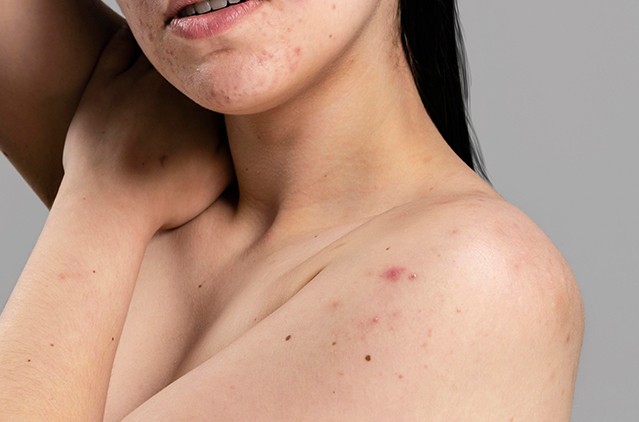
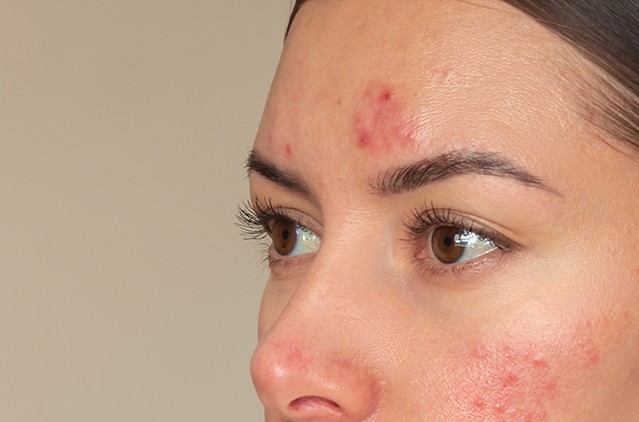
Salicylic acid peels are best for treating acne-prone skin. This is a beta-hydroxy acid (BHA) known for its deep-cleansing properties. It works by penetrating the pores and dissolving the buildup of dead skin cells and sebum, which helps to reduce acne and blackheads. This peel also has anti-inflammatory properties that can calm redness and irritation, making it suitable for sensitive skin.
- This peel clears acne and reduces breakouts for a clearer complexion.
- It minimizes pore size and enhances skin texture.
- Its anti-inflammatory effects reduce redness and irritation, leaving your skin even and healthy.
- Salicylic acid peels are ideal for you if you have acne-prone or oily skin.
- They’re also effective in reducing the appearance of enlarged pores, giving you smoother and more refined skin.
Glycolic Acid Peel
Glycolic acid peels are one of the most common types of chemical peels. Derived from sugar cane, glycolic acid is an alpha-hydroxy acid (AHA) that exfoliates the surface of the skin by breaking down the bonds between dead skin cells. This peel encourages cell turnover, revealing a brighter and smoother complexion. It’s particularly effective for addressing signs of aging, such as fine lines and uneven skin tone.
- This peel reduces fine lines and wrinkles.
- It brightens and evens out your skin tone.
- It also enhances skin texture and radiance.
- Additionally, it promotes collagen production for firmer skin.
- Ideal for dull or uneven skin tones.
- It’s effective for fine lines and wrinkles.
- It also helps with sun-damaged skin.
Lactic Acid Peel
Lactic acid peels are a milder option compared to glycolic acid peels, making them suitable for those with sensitive skin. Lactic acid, an AHA, works by gently exfoliating the skin, helping to shed dead skin cells and enhance hydration. This peel also helps to fade hyperpigmentation and improve skin texture, making it a great choice for dry and aging skin.
- This peel exfoliates and hydrates your skin.
- It fades dark spots and hyperpigmentation.
- It also improves skin texture and smoothness.
- It is gentle on sensitive skin.
- Perfect for dry or sensitive skin.
- It effectively addresses hyperpigmentation.
- It is also great for rough skin texture.
Black Peel
Black peels are designed to target deep skin issues and give significant rejuvenation. They often contain a combination of acids and active ingredients to penetrate deeper into the skin, addressing more severe concerns such as deep wrinkles and extensive sun damage. The unique formulation of black peels helps in revitalizing and tightening the skin.
- This peel targets deep wrinkles and severe sun damage. It revitalizes and tightens your skin.
- You’ll notice a significant improvement in skin texture.
- It also enhances your overall skin appearance.
- Ideal for advanced signs of aging.
- It’s effective for severe sun damage.
- It also addresses deep wrinkles.
Yellow Peel
Yellow peels are highly effective at significantly enhancing both skin tone and texture. The peel gets its name from the yellow color of the solution, which contains a combination of acids and active ingredients designed to exfoliate the skin gently. It is effective in treating pigmentation issues, sun damage, and overall skin rejuvenation.
- This peel improves your skin tone and texture. It treats pigmentation and sun damage.
- It enhances overall skin rejuvenation.
- You’ll achieve a more even and radiant complexion.
- Ideal for pigmentation and uneven skin tone.
- Effective for sun-damaged skin.
- It’s great for overall skin rejuvenation.
Inno Peel
Inno peels are a specialized treatment that combines multiple acids to address several skin concerns. These peels are known for their customizable nature, allowing practitioners to tailor the peel according to individual skin needs. Inno peels are effective for treating acne, pigmentation, and signs of aging, providing a comprehensive solution for skin rejuvenation.
- These peels are customizable for your specific skin concerns. They treat acne, pigmentation, and signs of aging.
- They offer overall skin rejuvenation. You’ll see improved skin texture and clarity.
- Perfect for multiple skin concerns. Effective for acne and pigmentation.
- Great for signs of aging.
Arginine Peel
Arginine peels use arginine, an amino acid that promotes skin healing and regeneration. This peel is particularly beneficial for improving skin elasticity and firmness. It helps in reducing the appearance of fine lines and wrinkles while providing hydration and nourishment to the skin.
- This peel enhances your skin’s elasticity and firmness.
- It reduces fine lines and wrinkles.
- It provides hydration and nourishment. It boosts overall skin health.
- Ideal for aging skin. Effective for skin elasticity issues.
- Good for fine lines and wrinkles.
TCA Peel
Trichloroacetic acid (TCA) peels are known for their deep exfoliation capabilities. TCA peels are effective in treating severe skin issues such as deep wrinkles, acne scars, and extensive pigmentation. The peel’s depth can be tailored to target specific skin concerns, offering a versatile solution for deep skin rejuvenation.
- This peel treats deep wrinkles and acne scars. It reduces extensive pigmentation.
- It provides significant skin rejuvenation. It enhances skin texture and tone.
- Perfect for severe wrinkles and acne scars. Effective for extensive pigmentation.
- Ideal for deep skin rejuvenation.
Cosmelan Peel
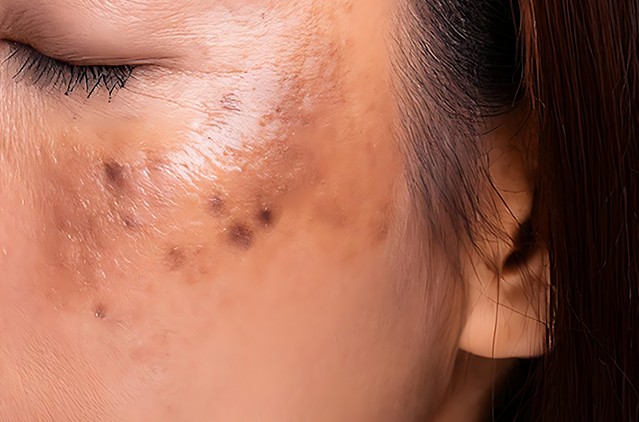
Cosmelan peels are specifically designed to target melasma and hyperpigmentation. This treatment blends various acids and active ingredients to reduce dark spots and even out skin tone. Cosmelan peels are highly effective for those struggling with pigmentation problems and need a targeted approach.
- This peel reduces melasma and hyperpigmentation. It evens out your skin tone.
- It provides a bright and clear complexion.
- It’s effective for pigmentation issues.
- Ideal for melasma and hyperpigmentation.
- Effective for uneven skin tone. Great for brightening the complexion.
Meline Peel
Meline peels are designed for advanced skin rejuvenation and pigmentation problems. The peel uses a combination of acids and active ingredients to improve skin texture, reduce pigmentation, and enhance overall skin clarity. Meline peels are suitable for those looking for a comprehensive treatment to address multiple skin concerns.
- This peel improves skin texture and clarity.
- It reduces pigmentation and dark spots.
- It enhances overall skin rejuvenation.li>
- You’ll achieve a smoother and brighter complexion.
- Perfect for pigmentation and dark spots.
- Effective for skin texture improvement.
- Ideal for overall skin rejuvenation.
What are the chemical peel procedure steps?
Let me take you through the detailed steps involved in a chemical peel treatment.
1) Procedure for a Superficial Chemical Peel
- The skin is first cleansed with a special cleanser to remove makeup and balance the skin’s pH.
- Petroleum jelly is applied around the corners of the mouth, eyes, and nose to protect these areas from excess exposure to the peel.
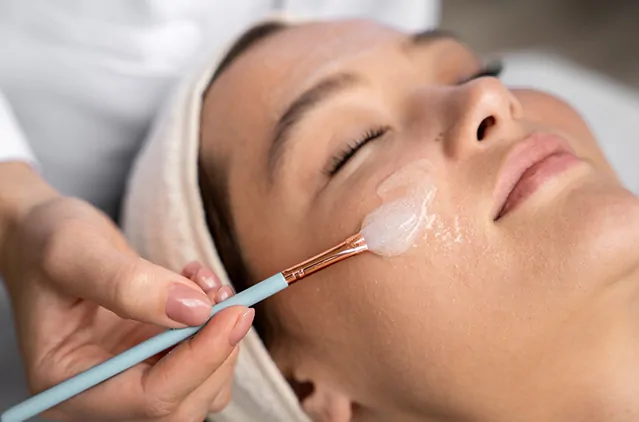
- A cotton ball, brush, gauze, or sponge is then used to apply a chemical solution, typically formulated with salicylic or glycolic acid.
- The treated skin starts to whiten, and you may feel a sharp, burning sensation as the solution takes effect.
- Lastly, a neutralizing solution or wash is applied to cleanse the skin and remove the chemical solution.
2) Procedure for a Superficial Chemical Peel
- The skin is cleansed with a special cleanser to remove makeup and maintain pH balance.
- Petroleum jelly is applied to the corners of the mouth, eyes, and nose to protect these delicate areas.
- A chemical solution containing TCA, sometimes combined with glycolic acid, is applied using a gauze or cotton applicator.
- As the treated skin begins to whiten, cool compresses are applied to soothe the area.
- You may also be given a hand-held fan to cool the skin.
- A burning or stinging sensation may be felt for about 20 minutes.
What does the post-procedure care entail?
After a chemical peel, it’s essential to follow the dermatologist’s advice, which typically includes using moisturizers, applying sunscreen, and avoiding sun exposure. For deeper peels, extra care like avoiding picking the skin and attending follow-up checkups is crucial to ensure proper healing.
Final Thoughts
Selecting the right chemical peel depends on your specific skin concerns and goals. Each type of peel offers unique benefits and can address various skin issues, from acne and pigmentation to signs of aging and overall texture improvement. Consult our experts to find the best peel for your skin and experience the transformative benefits of Kosmoderma’s specialized treatments.
FAQs