Hair loss can be an emotionally challenging experience, affecting millions worldwide. Globally, around 60% of men and 50% of women experience some form of hair loss. Male pattern baldness affects 30-50% of men by the age of 50, while 40% of women notice hair thinning by that age.
In India, about 60% of men and 25-40% of women are affected, with an increasing number of younger people (ages 20-30) experiencing hair loss due to lifestyle factors, stress, and genetics. From genetic conditions like androgenic alopecia to stress-induced shedding, finding an effective treatment can feel overwhelming.
One promising treatment in the field of dermatology is Platelet-Rich Plasma (PRP) therapy. Originally used for wound healing and joint injuries, PRP is now making waves in hair regrowth treatments. But how effective is PRP for hair restoration? Let’s explore the science and get a dermatologist’s view.
What Is PRP Treatment?
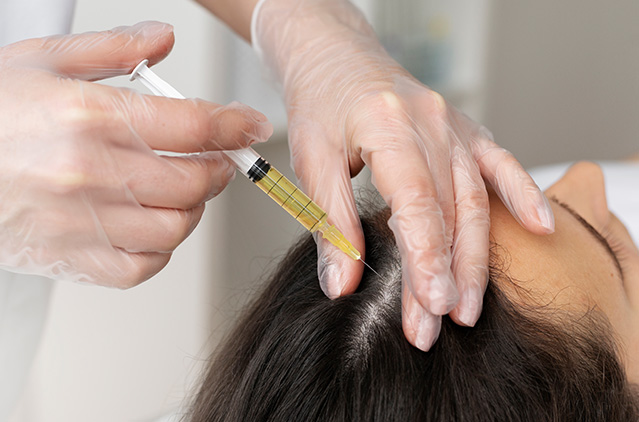
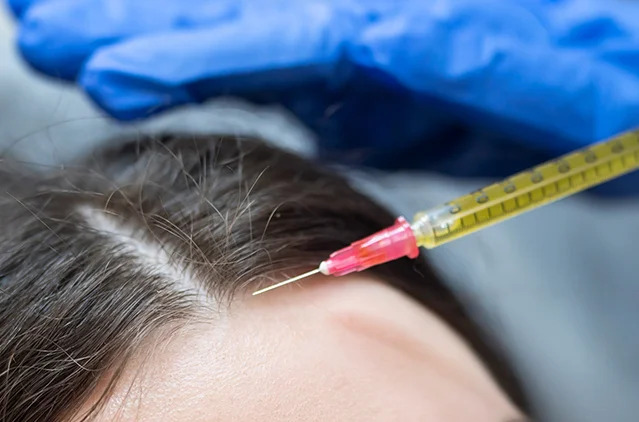
Platelet-rich plasma (PRP) therapy involves extracting a small amount of the patient’s blood, processing it to concentrate the platelets, and injecting this enriched plasma into the scalp. Platelets are rich in growth factors, which are proteins that stimulate healing, tissue repair, and cell regeneration. When injected into the scalp, these growth factors aim to revive inactive hair follicles, promote thicker hair strands, and increase hair density.
PRP is a non-surgical treatment that taps into the body’s natural healing mechanisms, making it an attractive choice for people who are not ready or suitable candidates for hair transplant surgery.
Understanding the Hair Growth Cycle
To better understand how PRP therapy acts for hair regrowth, it’s important to know the natural hair growth cycle. Hair growth is cyclical, and there are 3 main phases that every hair follicle goes through:
This is the growth phase, where rapid cell division occurs, leading to new hair formation. The phase can last between 3 to 10 years, during which hair actively grows. PRP is most effective when targeting hair follicles in this phase because it promotes stronger and thicker hair growth.
This is the transitional stage lasting 2 to 3 weeks. In this phase, hair growth stops, and the hair follicle prepares to enter the resting phase. PRP can help extend the anagen phase, delaying the onset of catagen and ensuring longer periods of hair growth.
This is known as the resting phase, which lasts for 3 to 4 months. During this time, hair shedding increases as old hairs fall out to make room for new ones. While PRP may not directly affect follicles in the telogen phase, it can support the transition back into the anagen phase, promoting the growth of new hairs.
The Science Behind PRP for Hair Growth
PRP works by stimulating the dermal papilla cells, which play an important role in hair follicle development and growth. It also activates certain signaling pathways that are involved in hair growth and prevents hair thinning by reducing hair follicle miniaturization, a key issue in conditions like androgenic alopecia (male or female pattern baldness).
Key growth factors in PRP that contribute to hair regrowth include:
1) Platelet-derived growth factor (PDGF):
Enhances blood vessel formation, increases circulation, and stimulates cellular repair.
2) Vascular endothelial growth factor (VEGF):
Boosts blood circulation to hair follicles, ensuring they get adequate nutrients.
3) Insulin-like growth factor (IGF):
Helps in hair follicle repair and cellular growth.
4) Transforming growth factor-beta (TGF-β):
Promotes the proliferation of dermal papilla cells, essential for hair growth.
Who Is the Ideal Candidate for PRP?
PRP works best in individuals experiencing early hair thinning, especially those with androgenic alopecia. Patients with diffuse thinning (thinning over a large area) may also see better results. However, those with long-standing baldness or individuals with inactive hair follicles (follicles that have been dormant for years) may not experience significant regrowth.
Ideal candidates typically:
- Those in the initial phases of hair loss.
- Have a good number of hair follicles still present.
- Are experiencing thinning rather than total baldness.
- Maintain practical expectations regarding the treatment’s results.
PRP is also safe for both men and women, and its minimally invasive nature makes it a suitable option for individuals looking for non-surgical alternatives.
PRP Procedure – What to Expect?
The PRP process typically involves 3 stages:
- Blood Draw: A small amount of blood (about 20 to 25 ml) is drawn from the patient, similar to a routine blood test.
- Centrifugation: The blood is placed in a centrifuge, which spins at high speed to isolate the platelet-rich plasma from other components of the blood. This process takes about 5-10 minutes.
- Injection: The PRP is administered into the scalp, targeting the hair follicles, with the help of a fine needle. The entire procedure takes around 60-90 minutes.
Patients usually undergo 3 to 4 treatments spaced about a month apart, with maintenance sessions every 4 to 6 months thereafter, depending on individual results and the severity of hair loss.
Scientific Support for PRP Effectiveness
- Several studies and clinical trials have investigated the effectiveness of PRP for hair loss. Though the degree of success can vary from person to person, research largely supports its possible benefits.
- A 2022 review on PRP therapy for hair loss indicated that PRP could help improve hair thickness and density, giving the appearance of fuller hair. Another study published in 2018 suggests that PRP increases blood supply to the hair follicles, a vital factor in promoting hair health and growth. The results indicate that PRP may serve as a useful option for addressing hair thinning, particularly during the initial stages of hair loss.
- In addition, PRP has shown effectiveness in addressing various types of hair loss, such as androgenetic alopecia (commonly known as male or female pattern baldness) and alopecia areata, an autoimmune condition. PRP’s ability to improve the scalp’s environment makes it a promising choice for those experiencing hair thinning.
Potential Risks and Side Effects
Since PRP involves using the patient’s blood, the risk of allergic reactions or infections is minimal. The most common side effects are temporary and mild, including:
- Mild pain or discomfort at the injection sites.
- Scalp tenderness or swelling.
- Temporary redness or bruising.
In very rare cases, there may be an injury to blood vessels or nerves, but this is uncommon when the procedure is performed by an experienced dermatologist.
Final Thoughts
PRP is a promising treatment choice for hair regrowth, especially for those in the early stages of hair loss. It is a safe, minimally invasive procedure that uses the body’s natural healing process to stimulate hair follicles and improve hair density.
Ultimately, the success of PRP for hair restoration depends on several factors, including the patient’s age, the extent of hair loss, and their commitment to follow-up treatments. If you’re interested in exploring PRP therapy for hair loss, schedule a consultation with Kosmoderma today! Our experts can help design a customized treatment plan to address your specific hair restoration goals.