Aging is inevitable, but wrinkles? Not so much. With the advancements in aesthetic medicine, Botox has become one of the most trusted solutions for maintaining a youthful appearance. But how does Botox work, and why is it so effective in reducing wrinkles? Let’s dive into the science behind this age-defying treatment and understand why it remains a gold standard in cosmetic dermatology.
The Unexpected Origins of Botox: From Bacteria to Beauty
Botulinum toxin, better known as Botox, has an intriguing origin story. It’s derived from a neurotoxin produced by Clostridium botulinum, a bacterium that, in large amounts, can cause botulism—a dangerous illness affecting the nervous system. However, in small, controlled doses, Botox has become one of the most trusted treatments in the medical and cosmetic world. Its journey began in the 1970s when it was first used in ophthalmology, but it didn’t take long for Botox to find a new home in dermatology. By the 1990s, researchers discovered its potential for reducing facial wrinkles, and Botox quickly became a breakthrough in cosmetic medicine.
A Game-Changer in Aesthetics: Botox’s Journey to Fame
In 2002, Botox A made history when it became the first botulinum toxin product approved by the FDA for treating glabellar frown lines—the deep creases between the eyebrows. This marked the beginning of Botox’s rise as a leading cosmetic treatment. Over time, its use expanded to treat a variety of other aesthetic concerns, including crow’s feet, marionette lines, and even neck bands. Botox continued to gain global recognition, with the European Union approving it for cosmetic purposes in 2006, and the FDA followed suit in 2009. Today, Botox is not just known for its ability to reduce wrinkles but also for its medical uses, such as treating hyperhidrosis (excessive sweating), strabismus (lazy eye), and cervical dystonia (neck spasms).
How Do Wrinkles Form?
Wrinkles primarily result from repetitive muscle contractions caused by facial expressions such as smiling, frowning, and squinting. Over time, these movements create permanent creases in the skin, particularly in areas like the forehead, around the eyes (crow’s feet), and between the eyebrows (frown lines). Other factors, such as collagen loss, sun exposure, and lifestyle choices, further contribute to wrinkle formation.
How Does Botox Work to Reduce Wrinkles?
The key to Botox’s effectiveness in reducing wrinkles lies in its ability to block acetylcholine, a neurotransmitter that facilitates communication between nerves and muscles. Here’s a closer look at the mechanism of action:
- Binding: Botox first binds to receptors on the surface of the nerve cells. This process takes about 30 minutes.
- Internalization: The toxin enters the nerve cell through a process called endocytosis, where the nerve membrane surrounds the toxin-receptor complex.
- Translocation: Once inside the nerve cell, Botox releases its light chain into the cytoplasm, where it targets a specific protein.
- Blocking: The toxin cleaves a protein called SNAP-25, which is essential for the release of acetylcholine. With acetylcholine blocked, the nerve can no longer signal the muscle to contract.
As a result, the targeted muscles experience temporary relaxation, leading to smoother skin and fewer wrinkles. This effect usually lasts for three to six months, after which the treatment needs to be repeated to maintain results.
Why is Botox So Popular?
1) Non-Surgical & Quick Procedure:
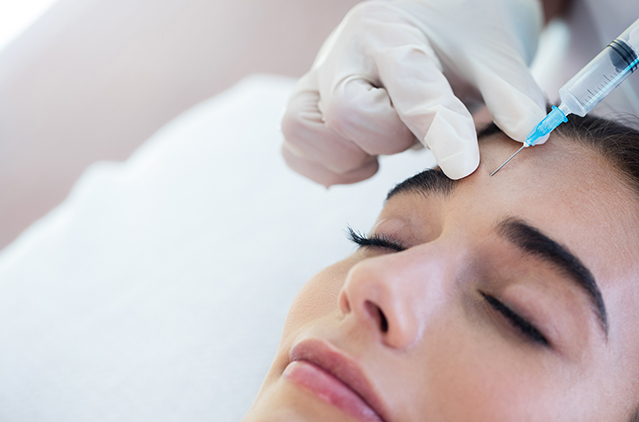
Botox injections take only 10-15 minutes, making them a convenient lunchtime procedure with no downtime.
2) Effective for Preventative Aging:
Younger individuals are now opting for Botox to prevent wrinkles before they form, a trend known as “Baby Botox.”
3) Safe & FDA-Approved:
Botox has been extensively studied and approved by the FDA for both cosmetic and medical uses.
4) Minimal Side Effects:
When administered by a qualified professional, Botox has minimal risks, with only temporary redness or slight bruising at the injection site.
What Areas of the Face Can Botox Treat?
Leading dermatologists/cosmetologists use Botox to treat visible signs of aging in the following areas:
- Neck
- Forehead
- Nose
- Around the eyes
Areas of The Face Treated with Botox
- Forehead Lines
- Eyebrows
- Frown Lines
- Around the eyes/Crow’s feet
- Top of the nose/bunny lines
- Jawline & Neck
- Smoker’s Lips
- Chin
What Aesthetic Concerns Can Dermatologists/Cosmetologists Treat with Botox?
- Vertical frown or Glabellar lines
- Fine lines at the outer corners of the eyes or Crow’s feet
- Cobblestone skin on the chin
- Horizontal and vertical wrinkles on the bridge of the nose or Bunny lines
- Eyebrow lift
- Sagging skin on the neck and jawline
- Horizontal forehead lines
Why Choose Kosmoderma for Botox Treatment?
Experienced MD-certified dermatologists and cosmetologists
- A 5-step consultation to understand your skin
- US-FDA-approved equipment ensures safety and effectiveness.
- Achieve significant improvement in a few sessions.
- No hidden costs. We ensure full transparency at every step.
- Served 1,30,000+ happy customers with a 99% satisfaction rate.
Are you ready to turn back the clock? Book a free consultation today and discover how Botox can help you achieve a smoother, youthful appearance!
Final Thoughts
Botox is more than just an anti-aging treatment—it’s a scientifically backed solution that has revolutionized the beauty industry. Whether you want to reduce existing wrinkles or prevent them from forming, Botox offers a safe, effective, and non-invasive way to maintain a refreshed look.
Want to learn more about Botox treatments at Kosmoderma? Contact us today!